
Read Time 7 mins

There's a conversation happening across the furniture and lighting industry right now, and it's happening in two completely separate rooms.
In one room: brand managers and VPs of Sales asking why their reps aren't showing their products more often, why certain accounts have gone quiet, why the rep who seemed enthusiastic at the trade show hasn't placed a meaningful order in two quarters.
In the other room: independent sales reps trying to cover 12 dealer accounts, manage 30 active product lines, and still build a quote before a 2pm meeting.
Both rooms have the same problem. They've just never compared notes.
This article doesn't offer a fix. It offers a mirror.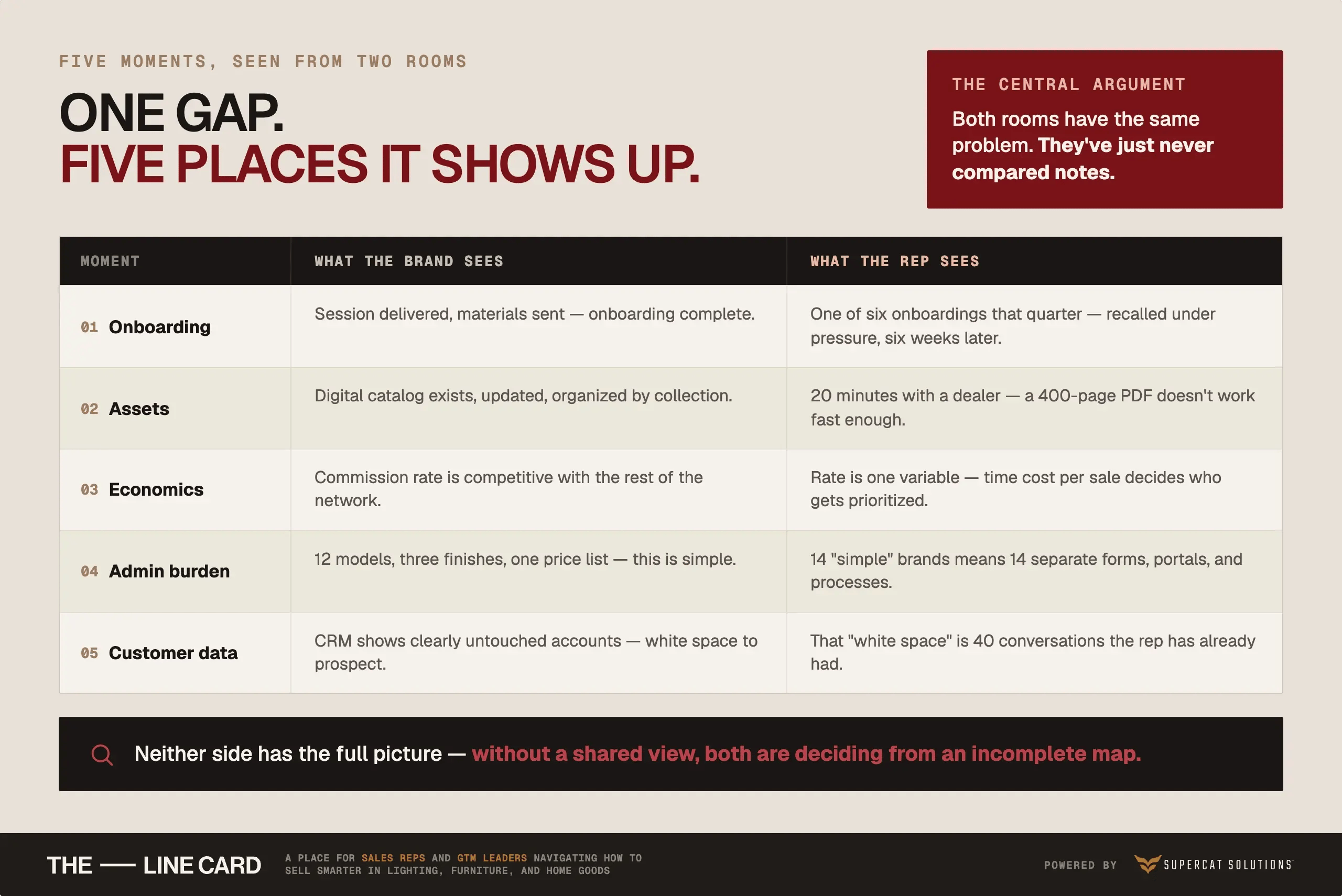
Why Sales Reps Deprioritize Brands
There is no universal reason a brand ends up at the bottom of a rep's priority list. But the pattern is consistent: what looks like neglect from one side looks like survival from the other.
How Sales Reps Lose a Brand Before They've Sold It
Most brands assume a completed onboarding is a successful one. It isn't. For a rep, it's one of six that quarter.
Brand side:
The brand ran a launch presentation, sent materials, maybe hosted a showroom visit. From their perspective, the rep has everything they need.
Rep side:
The rep sat through the session — 200 SKUs in 90 minutes. Two weeks later, a dealer asked about pricing. The rep couldn't find the price list, wasn't sure it was current, and defaulted to a brand they'd been selling for seven years.
The rep didn't forget the brand. The brand just didn't stay present.
What this actually means:
The brand measures onboarding by what was delivered. The rep measures it by what they can recall under pressure, six weeks later. Those are different benchmarks — and most brands only track one.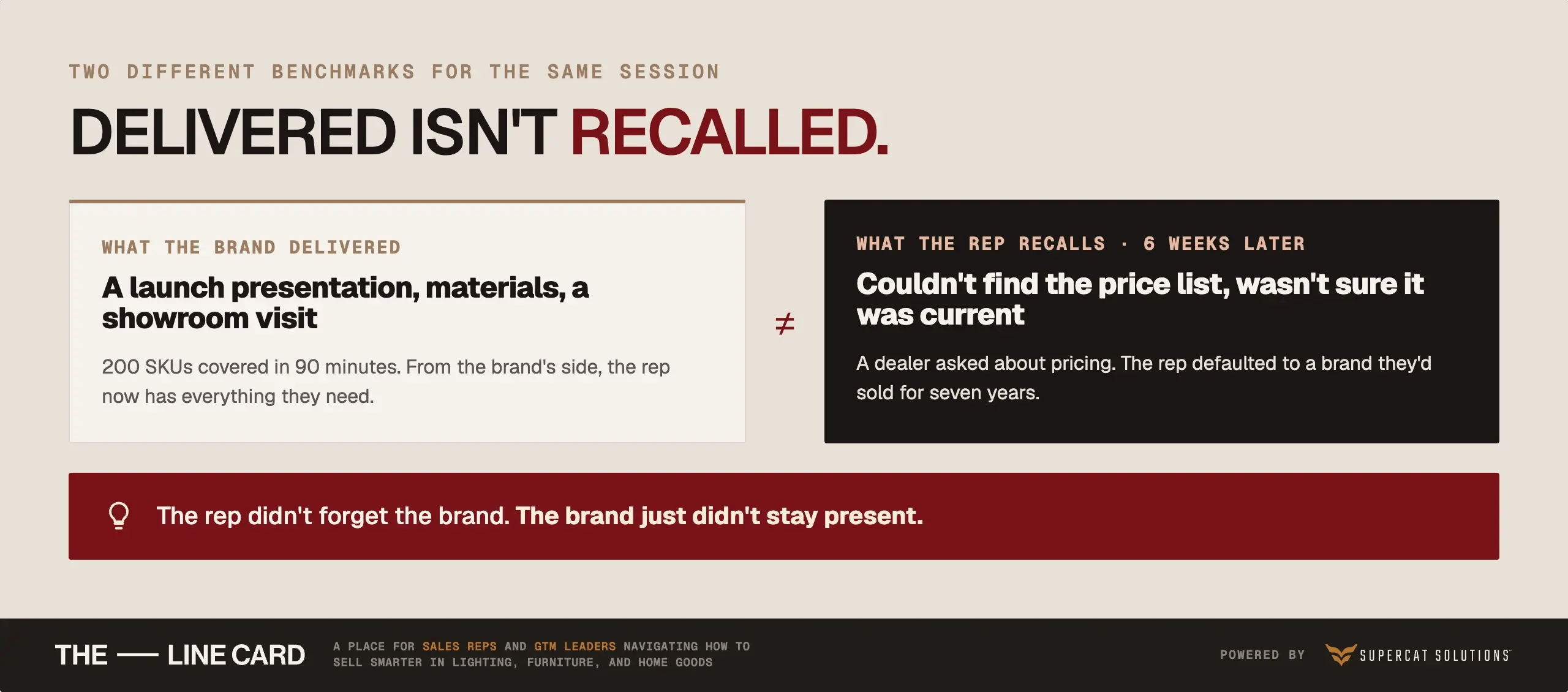
What Sales Reps Actually Need in the Room
Even when a rep remembers a brand, they still have to sell it. That's where assets either work or don't.
Brand side:
The catalog is digital, updated, organized by collection. The assets exist. The brand has done their part.
Rep side:
The dealer has 20 minutes. They want a specific chair in a specific finish. The rep needs to find it fast and answer a pricing question on the spot. For the brand with a 400-page PDF, that moment doesn't happen — not because the rep forgot them, but because the dealer's time ran out.
In a sales meeting, the brand with the most accessible assets wins the floor time. Every time.
What this actually means:
"Assets exist" and "assets work in the field" are not the same thing. The shift from print catalogs to digital sales tools is partly about this: not aesthetics, but speed of access under real selling conditions.
Why Sales Reps Do the Math Differently
The commission rate is usually the first thing a brand checks when a rep underperforms. It's usually the wrong place to look.
Brand side:
The rate is competitive. Other reps in the network are producing. If this rep isn't prioritizing the line, the commission structure isn't the reason.
Rep side:
Brand A pays 10% and takes 15 minutes to quote. Brand B pays 12% but requires custom specs and three rounds of back-and-forth. Brand C — the one asking for more attention — pays 8% and needs a complex configurator explained to every new dealer. The rep doesn't choose based on preference. They choose based on which brand lets them earn a living.
What this actually means:
Commission percentage is one variable. Time cost per sale is the other — and it rarely appears in any agreement, but it determines almost everything about how brands get prioritized in practice.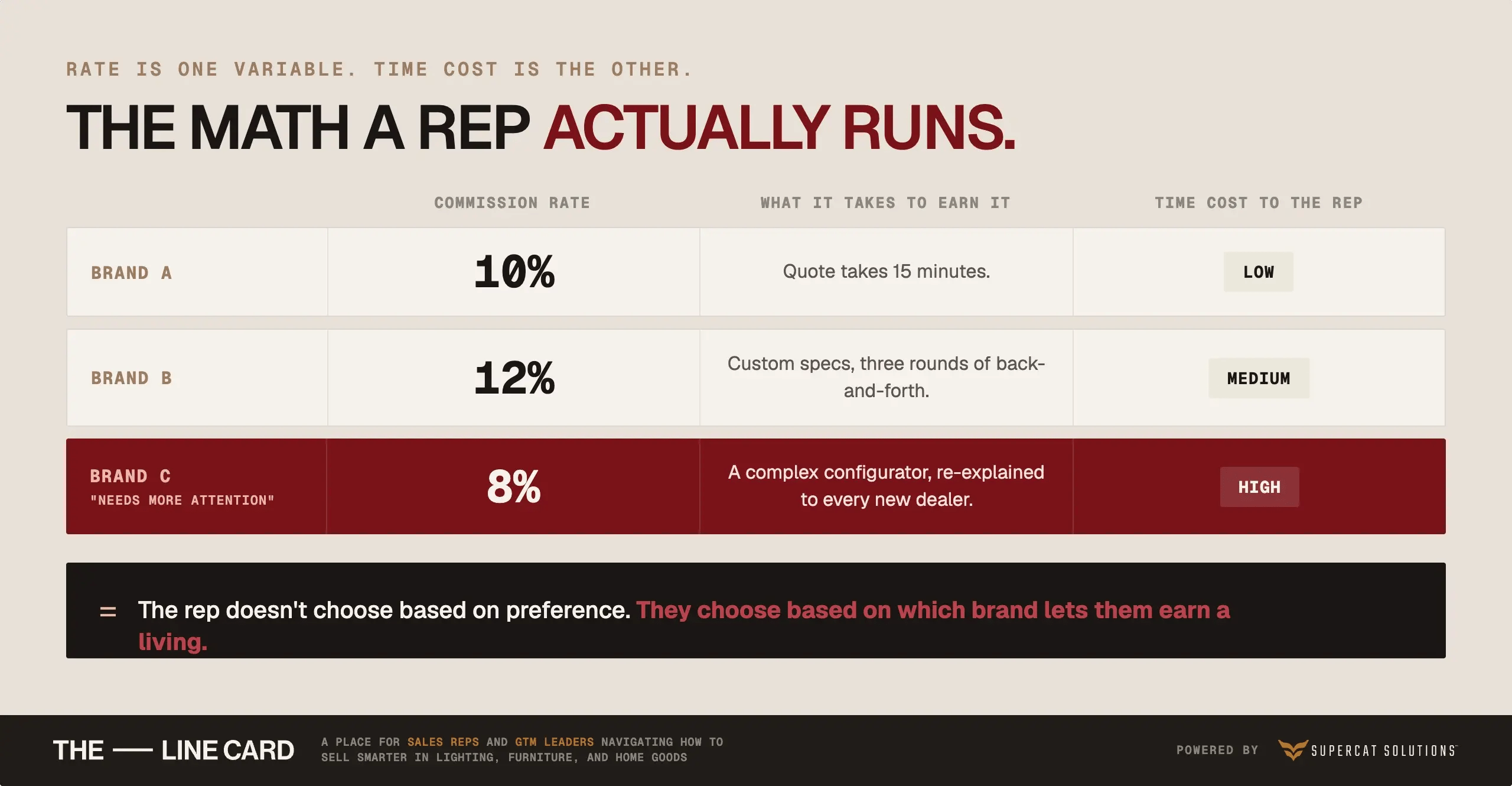
What "Simple" Looks Like to an Independent Sales Rep
There's a quieter cost that rarely gets named: the administrative burden after the sale.
Brand side:
12 base models, three finishes, a price list that hasn't changed in two seasons. Simple. If reps aren't moving it, the issue must be effort.
Rep side:
The rep has 14 brands that are "simple." Each has its own order form, portal, backorder process, and fulfillment contact. Managing 14 simple brands produces the same load as managing 14 complicated ones. The brands that stay active are the ones that ask the least outside the sales call.
The selling process doesn't end when the dealer says yes. It ends when the order ships and the commission hits.
What this actually means:
Brands evaluate selling difficulty by how easy the product is to explain. Reps evaluate it by how much invisible work the brand creates afterward. Those are different calculations — and brands rarely see the second one.
Customer Data: Two Different Maps
Brand side:
The CRM shows purchase history and account activity. There are clearly untouched accounts in the territory. Why aren't reps prospecting into them?
Rep side:
The rep knows those accounts personally — and knows they're not a fit right now, or had a bad experience with a similar brand three years ago. What the brand sees as white space, the rep sees as 40 conversations they've already had.
What this actually means:
Brands have transactional data. Reps have relationship context. Neither side has the full picture — and without a shared view, both are making decisions from an incomplete map.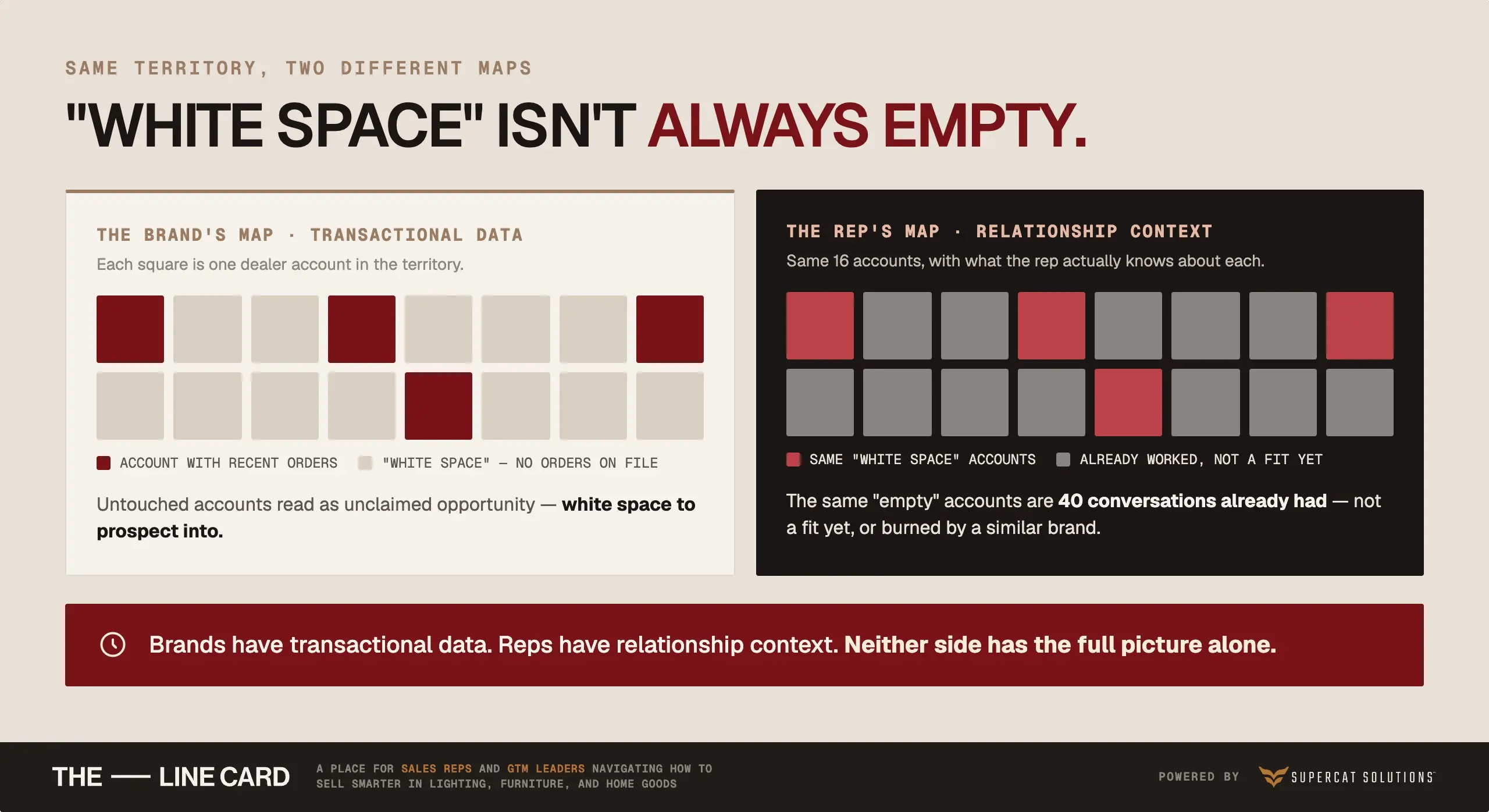
The Gap No One Talks About
The frustration on both sides is legitimate.
Brands depend on reps to carry their investment into the market. When a rep goes quiet, it affects revenue, market read, and confidence in the channel.
Reps build businesses on relationships. When onboarding is a single session, assets don't work under pressure, and the selling process creates invisible work — the rep isn't failing the brand. The brand just wasn't set up to succeed in the rep's workflow.
Independent sales reps are stretched thin across too many lines, spending more time on admin than selling. That's not a character flaw. It's the math of how the model operates.
The gap between those two rooms is real. And until both sides can see what the other is working with, the same brands will keep ending up at the bottom of the same list.